The Great Wealth Transfer and Luxury Real Estate
The Trend Report
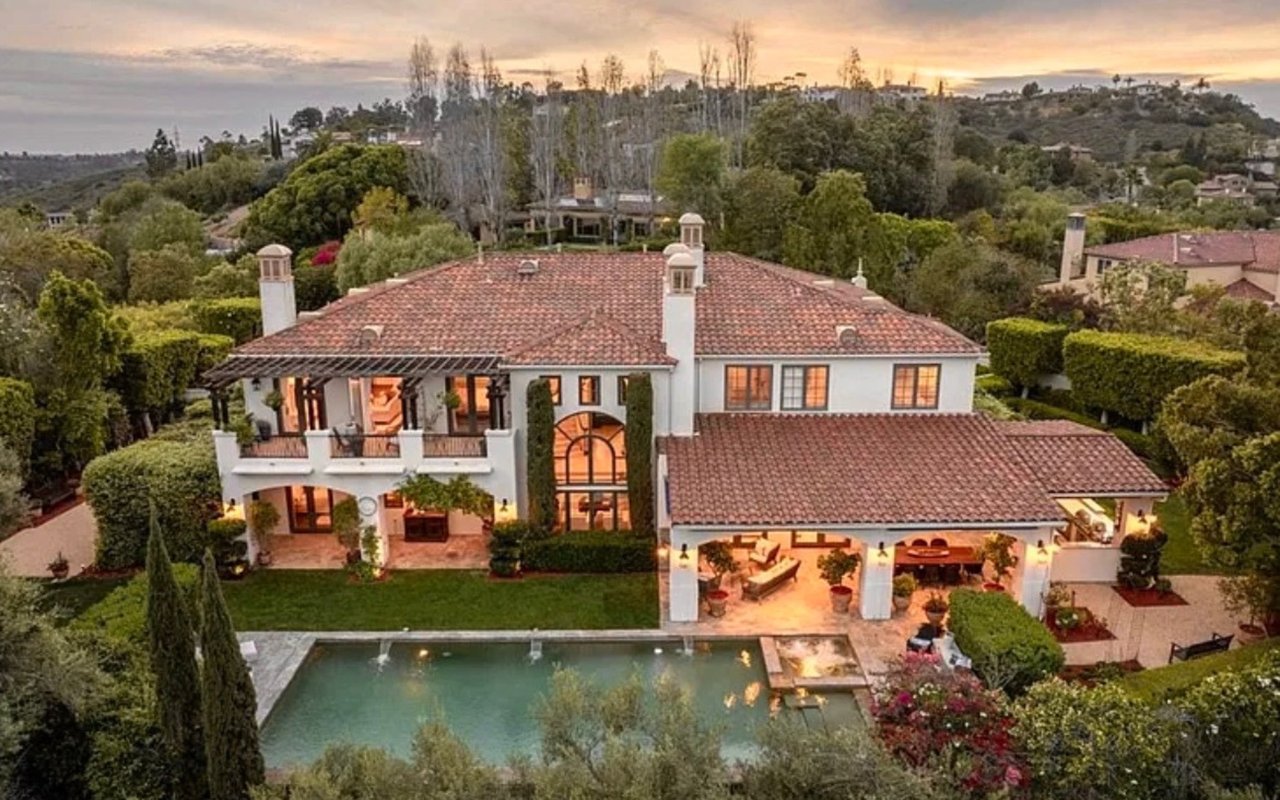
The Trend Report
The conversations I have with clients have shifted meaningfully over the past several years. Where discussions once centered on market timing and mortgage strategy, I now find myself sitting across from adult children who have just inherited a coastal estate in La Jolla, or from a founder in his late forties whose parents recently passed a Rancho Santa Fe property into his name. These are not transactional conversations. They are moments of genuine consequence, and they are becoming far more common.
What we are witnessing right now is not a market cycle. It is a generational reckoning. The largest intergenerational transfer of assets in recorded history is actively unfolding, and its impact on luxury real estate, particularly here in San Diego's premier communities, is something every discerning buyer, seller, and heir should understand clearly.
The scale of what is happening is difficult to overstate. According to data from Altrata powered by Wealth-X, approximately $38.3 trillion in assets are expected to change hands globally over the next decade. In the United States alone, that figure reaches $17.3 trillion, with centimillionaires (individuals with $100 million or more in net worth) accounting for nearly 44% of the total global transfer.
What is the Great Wealth Transfer?
The Great Wealth Transfer refers to the projected movement of trillions of dollars in assets from Baby Boomer and older-generation households to their heirs over the next ten years. In the United States, this transfer is expected to reach $17.3 trillion, with a meaningful portion flowing into real estate. It represents not only a redistribution of financial capital but a significant shift in property ownership, investment preferences, and lifestyle priorities across the luxury market.
This is not a future event. It is happening now, in 2026, and the decisions being made inside affluent families today will determine what luxury real estate looks like in Rancho Santa Fe, La Jolla, Del Mar, and markets like them for the next generation.
Despite the cultural attention paid to millennials and Gen Z, the data is clear: Generation X inherits first. Research from Cerulli Associates confirms that Gen X stands to receive the greatest portion of assets within this ten-year window. Altrata's own research found that in North America, the average age of heirs inheriting from ultra-wealthy parents ($30 million or more) is 46.1 years old, firmly within the Gen X demographic.
That matters enormously for how luxury real estate demand will evolve. Gen X heirs tend to be pragmatic and strategic. Many occupy what researchers call the "Sandwich Generation," simultaneously supporting their own children while managing the care and estates of aging parents. In practice, this translates to a specific and identifiable set of real estate priorities: multi-generational homes, smart and sustainable technology, privacy-forward design, and properties that serve both lifestyle and portfolio diversification goals.
Millennials will ultimately inherit more over a 25-year horizon, but the near-term activity, the transactions being negotiated and decided upon right now, will be driven predominantly by Gen X clients. Understanding that distinction is central to serving these families well.
Real estate accounts for roughly 12% of the $38.3 trillion expected to transfer globally, approximately $4.6 trillion in property wealth moving between generations. In the U.S., that share is nearly $2.4 trillion, with the very-high-net-worth segment ($5–$30 million) driving the largest share of real estate turnover at 65.7%.
What heirs choose to do with inherited properties varies, but several patterns emerge consistently. Some elect to retain primary residences while selling secondary or trophy properties to simplify their portfolios. Others reinvest proceeds to move up within the luxury market or acquire a second home in a lifestyle destination. Younger inheritors, particularly those in the Gen X and millennial cohorts, tend to allocate a significantly larger portion of their overall wealth to real estate than their parents did. Research cited in the Coldwell Banker Global Luxury 2026 Trend Report notes that younger high-net-worth individuals dedicate 12% to 24% of their wealth to real estate, compared with just 4% to 6% among older counterparts.
The values embedded in those decisions are equally telling. Wellness infrastructure, home-office capability, privacy, security, and high-service amenities are consistently cited as priorities. Properties positioned at the intersection of lifestyle appeal and income or investment potential are expected to remain among the most sought-after.
In communities like Rancho Santa Fe, where a single estate can serve both as a primary residence and a generational asset, these shifts translate directly into how sellers should be positioning their properties, and how buyers should be evaluating what they inherit or acquire next.
For the San Diego coastal luxury market specifically, the implications are tangible. The U.S. Sunbelt, a category that includes Southern California's premier communities, is identified in Altrata's analysis as one of the regions most likely to see heightened property turnover as generational transitions accelerate. Leisure markets and lifestyle destinations are projected to draw sustained interest from domestic VHNW heirs.
How the Great Wealth Transfer affects San Diego luxury real estate:
As high-net-worth Gen X heirs begin deploying inherited capital, markets like Rancho Santa Fe, La Jolla, and Del Mar are positioned to benefit from both increased transaction activity and a new wave of buyers entering the $3–$10 million property range. This mid-market luxury segment is expected to see meaningful activity as a broader base of affluent heirs pursues primary upgrades, second homes, and suburban estate options in lifestyle-centric coastal communities.
There is another dimension worth noting. As Altrata's research suggests, private brokerage activity and off-market transactions are expected to increase as more transfers are facilitated through trusts, family offices, and private structures. For UHNW clients in particular, discretion is not merely preferred, it is often a structural requirement. This is an environment where relationships, expertise, and market access matter more than any public listing.
Over my two decades in this market and across the bi-coastal work I do in Boston's Beacon Hill and Back Bay, I have seen firsthand how the most significant transactions are often never publicly visible. The families navigating inherited assets of this magnitude are not browsing portals, they are working with advisors they trust.
One aspect of the Great Wealth Transfer that receives far less attention than it deserves is the intra-generational dimension, the substantial movement of wealth between spouses. Research from Cerulli Associates projects that an estimated $54 trillion will pass between partners by 2048, with roughly $40 trillion expected to go to widowed women from the Baby Boomer generation and older.
This is not a footnote. It represents a significant and distinct buyer profile entering the luxury market for the first time, often with a different set of priorities than their predecessors. Affluent women who come into new wealth tend to prioritize community safety, proximity to family and trusted friends, sustainable features, and properties that combine financial security with personal meaning. These decision drivers carry real implications for how luxury properties should be presented, priced, and marketed when serving this emerging client base.
Whether you are an heir evaluating inherited property, a legacy seller preparing for an estate transition, or an affluent buyer ready to deploy capital strategically, the following considerations are worth examining with care:
This is precisely where the advisory relationship matters most. The data tells us that wealth is moving. The strategy for each family is singular.
The Great Wealth Transfer describes the movement of an estimated $38.3 trillion in assets from Baby Boomer and older-generation households to their heirs over the next decade. Real estate accounts for approximately 12% of that transfer, or about $4.6 trillion globally. In the United States, nearly $2.4 trillion in property wealth is expected to change hands, with the very-high-net-worth segment ($5–$30 million) driving the largest share of real estate activity.
According to research from Cerulli Associates and Altrata, Generation X is first in line over the next ten years. The average age of heirs inheriting from ultra-high-net-worth parents in North America is 46.1 years, placing them squarely in the Gen X cohort. Millennials are expected to inherit more over a longer 25-year horizon, but near-term luxury real estate activity will be shaped primarily by Gen X decision-makers.
Younger inheritors tend to allocate a much larger share of their wealth to real estate than older generations. Many will retain primary residences while selling secondary properties to generate liquidity or simplify portfolios. Others will reinvest proceeds into the luxury market at a higher price tier. Values-driven priorities, including wellness, sustainability, privacy, and technology, are expected to guide purchasing decisions.
Southern California's premier coastal communities are positioned among the lifestyle destinations most likely to benefit from increased wealth transfer activity. The $3–$10 million mid-market luxury segment is expected to see meaningful demand from a broader base of affluent heirs, while UHNW and centimillionaire clients are expected to pursue ultra-private, trophy, and off-market transactions in established prestige markets.
This is a reasonable expectation. As more transfers are facilitated through trusts, private structures, and family offices, discreet brokerage activity is expected to increase while public listing inventory may contract. For families with significant inherited assets, privacy and transaction structure are often central considerations, not afterthoughts.
What strikes me most about this moment is not the scale of the numbers, though they are extraordinary. It is the weight of the decisions behind them. Every estate that changes hands carries a history. Every heir navigating this transition deserves counsel that is as thoughtful as the legacy itself.
The Great Wealth Transfer is not simply a market force. It is a collection of deeply personal decisions, unfolding inside families across Rancho Santa Fe, La Jolla, Del Mar, and communities like them. My work, at its core, has always been to bring precision and strategic clarity to exactly these moments.
If you or your family are navigating an inherited property, planning an estate transition, or considering how inherited wealth might reshape your real estate position, I welcome the conversation. Reach out to schedule a private consultation, and let's approach your next chapter with the care it deserves.
If you are considering a purchase or sale in the greater San Diego luxury market or in Boston’s premier neighborhoods, I welcome a confidential conversation.
Melinda Stockmal
[email protected]
(617) 943-8333
Stay on top of the latest real estate trends and get exclusive insights from industry expert Melinda Stockmal Sign up for our newsletter today and never miss a beat. Join our community of savvy homeowners, investors, and real estate enthusiasts and get the inside scoop delivered straight to your inbox.
Don't wait, Sign Up Now!
Stay up to date on the latest real estate trends.
Boston
Melinda Stockmal
The Real Question Behind the Tax Comparison
Home Buying
Melinda Stockmal
More Than a Luxury Community. A Way of Life.

Boston
Melinda Stockmal
What Boston Offers That Few Cities Can Match
Home Buying
Melinda Stockmal
Community Character: Two Very Different Definitions of Luxury

Guides
Melinda Stockmal
What Is Rancho Santa Fe and Why It Attracts Elite Buyers
The Trend Report
Melinda Stockmal
A Shift of Historic Proportions Is Already in Motion
Rancho Santa Fe
Melinda Stockmal
What Defines a Rancho Santa Fe Equestrian Property?
The Trend Report
Melinda Stockmal
What Customization Means in Today’s Luxury Market

Market Data
Melinda Stockmal
Strategic Luxury Real Estate Investing